Science News
 American
Science News for 4 March 2019
American
Science News for 4 March 2019
This Glass Seemed to Break the Laws of Electricity -- Here's What Really Happened
Live Science - 4 Mar 2019 14:07 The glass shouldn't have boiled. But it did. Physicists had to figure out why that wasn't against the laws of physics.
Imaging technique lets ordinary cameras capture high-speed images of crack formation
Phys.org - 4 Mar 2019 17:00 Direct imaging of dynamic cracks as they occur can tell us a great deal about the physics of fracturing and properties of fracturing materials, which would benefit many fields ranging from materials science to engineerin...
Graphene Shows Promise for Repairing Broken Bones
Singularity Hub - 4 Mar 2019 17:00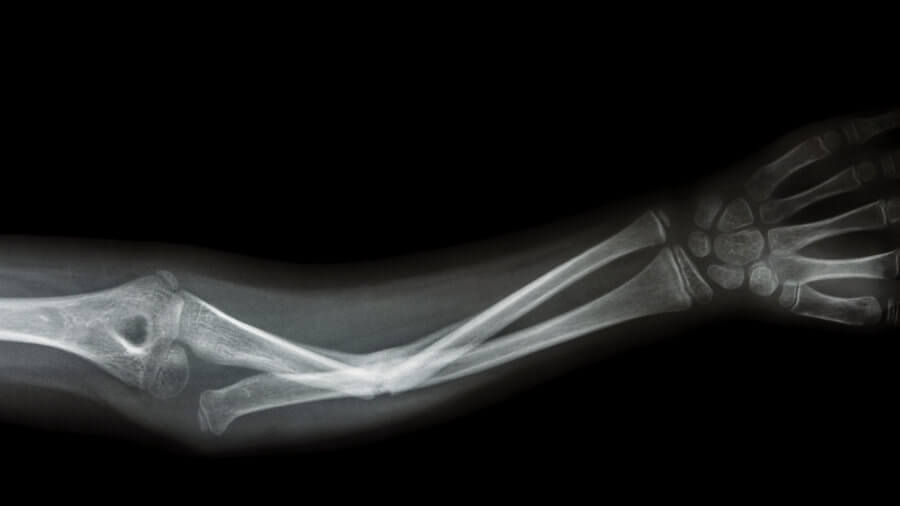 When you were a kid, did you ever sign a classmate's cast after they broke an arm or a leg? Your name would be on display there for the rest of the semester. Broken bones are one of the worst trade-offs in childhood--a f...
New simulation methods to visualise quantum effects in superfluid fermions
Phys.org - 4 Mar 2019 16:08 What exactly happens inside neutron stars - the final stage of a giant star - is subject to speculation. In terms of physics, the interiors of neutron stars, cold atomic gasses and nuclear systems all have one thing in c...
Applying a network perspective to human physiology
Phys.org - 4 Mar 2019 16:00 In modern medicine, physicians treat organs in isolation. People with heart conditions go to heart specialists, just as those with kidney ailments seek kidney specialists. While this model has made tremendous progress an...
The random anti-laser
EurekAlert! - 4 Mar 2019 07:00
(Vienna University of Technology) Scientists at TU Wien have found a way to build the 'opposite' of a laser -- a device that absorbs a specific light wave perfectly. This can be done even in complicated systems, in which...
Ultracold atoms could provide 2-D window to exotic 1-D physics
Phys.org - 4 Mar 2019 23:21 Rice University physicists Matthew Foster and Seth Davis want to view a vexing quantum puzzle from an entirely new perspective. They just need the right vantage point and a place colder than deep space.
The force is with us, always? Tuning quantum vacuum forces from attractive to repulsive
Phys.org - 4 Mar 2019 23:19 The force is strong not only in Star Wars lore but also as a fundamental property in physics. For example, scientists can put two uncharged metal plates close together in a vacuum, and "voila!" ---they will attract each ...
Magnonic devices can replace electronics without much noise
Phys.org - 4 Mar 2019 22:49 Electronic devices such as transistors are getting smaller and will soon hit the limits of conventional performance based on electrical currents.
Transforming magnetic storage might stem from the vision of quantum
Phys.org - 4 Mar 2019 22:30 Magnetic materials have a worldwide market share of some $50 billion per year. A new frontier in the study of these materials, femtomagnetism, could lead to ultrafast magnetic storage devices that would transform informa...
Genetic Factors Influence Human Brain Expansion
Neuroscience News - 4 Mar 2019 21:03
Results provide new insight into evolution, IQ and development of the human brain.
A new approach to an old question: How do we actually cooperate?
Phys.org - 4 Mar 2019 20:00 In the animal kingdom, birds band together to ward off predators, and honeybees work collectively to benefit the entire hive. Animals of the human persuasion can act cooperatively too, at times, though this behavior is n...
Hacking just 1 in 10 cars could gridlock all of the roads in Manhattan
New Scientist - 4 Mar 2019 19:51
Internet-connected cars promise to reduce traffic incidents with sensors that can stop a car, but if they were hacked whole cities could shut down
Chirality yields colossal photocurrent
Phys.org - 4 Mar 2019 19:19 A recently discovered Weyl semimetal delivers the largest intrinsic conversion of light to electricity of any material, an international team lead by a group of Boston College researchers reports today in the journal Nat...
Bill Gates's pancake problem - and three more pancakes in science
New Scientist - 4 Mar 2019 18:38
Sorting a stack of pancakes by size is a vexing challenge for mathematicians, but Microsoft's Bill Gates came up with an enduring solution.
Psychedelic Microdosing in Rats Shows Beneficial Effects
Neuroscience News - 4 Mar 2019 18:24
Research on rats suggests microdosing DMT may have beneficial effects for those suffering depression and anxiety, but also probable adverse changes in neuronal structures and metabolism.
Superhydrides approach room temperature superconductivity at high pressure
Phys.org - 4 Mar 2019 18:00 Theory suggests that metallic hydrogen should be a superconductor at room temperature; however, this material has yet to be produced in the lab. Metal superhydrides are packed with hydrogen atoms in a configuration simil...
Assembly in the air: Using sound to defy gravity
Phys.org - 4 Mar 2019 18:00 Scientists at the University of Bath have levitated particles using sound in an experiment which could have applications in so-called "soft robotics" and help reveal how planets start to form.
A gel made from urea has molecules that resemble friendship bracelets
New Scientist - 4 Mar 2019 18:00
A gel made from urea, the main compound in urine, spontaneously forms braided nanofibres that could help with engineering new medicines
Quasiparticles experimentally shown to interfere for first time
Phys.org - 4 Mar 2019 18:00 Qubits, the units used to encode information in quantum computing, are not all created equal. Some researchers believe that topological qubits, which are tougher and less susceptible to environmental noise than other kin...
Wikipedia's civil wars show how we can heal ideological divides online
New Scientist - 4 Mar 2019 18:00
When people on different sides of the political spectrum work together to edit Wikipedia articles, the results are better than when everyone agrees
New shapes of laser beam 'sneak' through opaque media
Phys.org - 4 Mar 2019 18:00 Researchers have found a way to pre-treat a laser beam so that it enters opaque surfaces without dispersing--like a headlight that's able to cut through heavy fog at full strength.
 Global
 Great Britain
 Indian
 South Africa